.jpg?format=pjpeg&width=1600&quality=75&auto=webp)
- Can be electroplated
- Excellent dimensional stability
- Low moisture absorption
- Great hydrolytic stability
- Good strength and stiffness
- High dielectric strength
- Excellent chemical resistance
- High heat deflection temperature
- Combustion resistant
- Blendable with other materials
- Different grades available based on product requirements
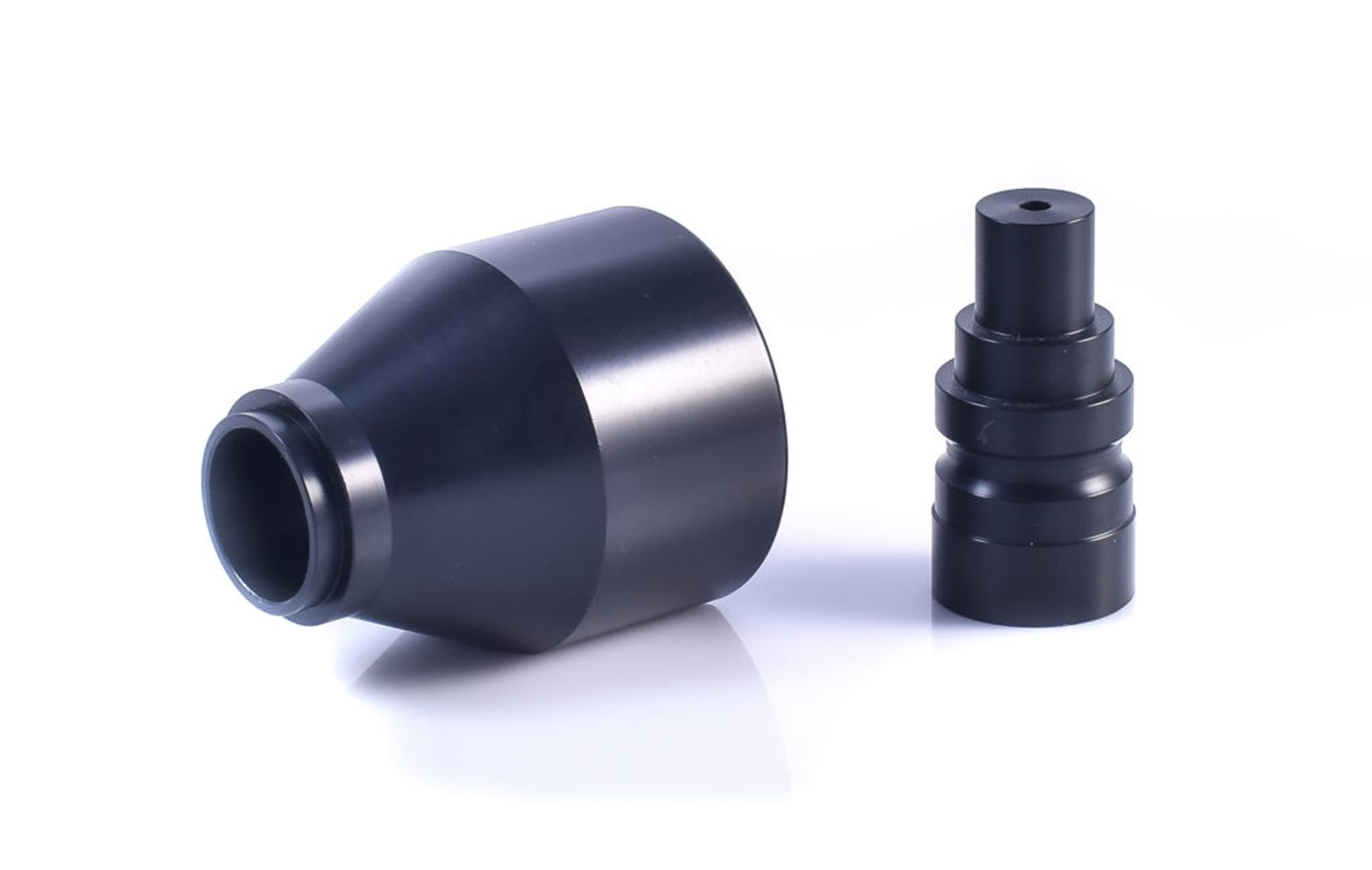
DIMENSIONALLY STABLE, EXCELLENT ELECTRICAL INSULATION
Manufacturers in all kinds of industries use Noryl®. This name applies rather to the whole family of modified polyphenylene oxide (PPO) resins rather than a particular one kind. Most know this material for its excellent combination of electrical, thermal, and mechanical properties.
It appears in several different applications: surgical instruments, deep sea O² systems, telecommunications components, and FDA-compliant food containers — to name a few. Its low moisture absorption rate and low thermal expansion rate make it one of the most dimensionally stable thermoplastics for machining. It's also one of the very few non-metals that can be electroplated and used as an insulator.
Grade | Product Characteristics | Common Applications |
|---|---|---|
Noryl EN265 | Easy to machine, high dielectric strength, good impact resistance | Electrical housing and structural components, fluid handling applications |
Noryl GFN3 | Low moisture absorption, hydrolytic stability, low warpage | Fluid handling, medical/healthcare components, food handling components |
Combining PPO and polystyrene, Noryl® stands as a versatile choice for an array of different products and applications. Engineers often turn to this material for designs that require (among other qualities) high strength, low moisture absorption, and low thermal expansion
Noryl®'s extraordinary strength holds even under direct and intense impact. Through its molecular combination, the resin continues to keep its dimensional stability and resists deformation more than others. If a product needs mechanical strength, Noryl® performs well despite rigorous conditions.
Additionally, its high flame resistance and heat deflection temperature properties make it stand out. Engineers have noted Noryl®'s continuous use with operating temperatures as high as 104°C (220°F) without thermal expansion or compromise. The resin also has a high limiting oxygen index, reducing the risk of combustion. This typically marks it for use where products need to incorporate an element of fire safety.
CHEMICAL RESISTANCE & OTHER PROPERTIES
Many have noted Noryl®'s chemical resistance to many different types, including water. The resin holds up quite well against acids, bases, alcohols, and a variety of others. However, it tends to struggle when exposed to certain aromatic and non polar organic solvents. When it comes to water, Noryl® has a low water absorption rate, making it resistant to moisture and exhibiting good hydrolytic stability. Despite this kind of exposure, the resin tends to hold up for prolonged periods of time.
As Noryl® has an unusual and particular chemical composition, the materials stands as one of the only few non-metallic materials that can be electroplated. Due to its high dielectric strength (coming in at 500 kV/in), machined Noryl® can be used as an electrical insulator without breaking down. This blended with its great strength and low flammability make this a choice material for electronics.
In summary, Noryl® components have excellent mechanical, thermal, and electrical properties. As it has low moisture absorption and low thermal expansion, these qualities make Noryl® one of the most dimensionally stable and easy to fabricate plastics available. Black is the standard color for Noryl®, but it is easy to paint to a different color as well as glue to different components.
The machinability of Noryl® makes it a go-to choice for a wide variety of applications, including:
- Life science and research instruments and implements
- Electrical components, housings, and insulators
- Medical and surgical instruments and implements
- Telecommunications components
- Parts for scrubbers, vaporizers, water pumps, and other wet-operation instruments
- Applications that require food contact (Noryl® plastics are FDA-compliant for contact with food.)
At Controlled Fluidics, we use several varieties of Noryl®, including:
- Unfilled Noryl® EN265 plate up to 2” thick
- 30% glass fiber reinforced Noryl® GFN3 plate up to 2” thick
Plastic Machining with Noryl Plastic transcript