Bonded Manifolds
Solutions & Processes
Bonded Plastic Materials
Manifold Assembly
Machined Plastics
Machining Processes
Support Services
Plastics
Machined Plastic Parts Materials ABS Plastic for Machined Parts & Prototypes Acetal & Delrin MachiningAcrylic Plastic Materials & MachiningCOC/COP Plastic Materials & MachiningCPVC Plastic Material & MachiningCTFE/KEL-F Plastic Material & MachiningDelrin AF Plastic Material & Machining ECTFE/Halar Plastic Material & Machining Fluorosint® 500 and 207 Plastic Materials & MachiningHDPE Plastic Material & MachiningLDPE Plastic Material & MachiningNoryl® Plastic Material & MachiningNylatron GS: Self Lubricating Nylon for Precision MachiningNylon 6/6 Material & Machining PBT Plastic Material & MachiningPEEK Plastic Machining for Medical, Life Science & Aerospace OEMsPES (Radel A) Plastic Material & MachiningPlastic Machining With PETPhenolics/G10 Plastic Machining Polycarbonate Plastic & MachiningPolypropylene Plastic Material & MachiningPolysulfone Plastic Matetial & MachiningPPS Plastic Material & MachiningPVC Plastic & Machining PVDF Plastic Material & MachiningRadel® Plastic Material & MachiningRexolite® Plastic Material & Machining Tecadur Plastic Material & MachiningTeflon® Plastic Machining (PTFE) | Controlled FluidicsTorlon PlasticMaterial & MachiningUHMW Plastic Materials & MachiningUltem® (PEI) Plastic Material & MachiningVespel® Plastic MachiningPOLYMER OPTIONS
Applications
Aerospace
Life Science
Medical & Healthcare
Research & Diagnostic
Military & Defense
Specialized Electronics
Resources
Plastic Manifold Design Guide
Articles & Written Works
White Papers
General Chemical Resistance
Media Kit
Controlled Fluidics Design Gallery
About Us
Our Key Plastics Partners
The Controlled Fluidics Difference
Case Studies & Success Stories
Testimonials
We Are Hiring
Back to the product list

POLYCARBONATE MANIFOLDS

POLYCARBONATE MANIFOLDS AT A GLANCE


Polycarbonate manifolds are quickly replacing acrylic as a baseline material. Polycarbonate readily bonds and welds, supports higher operating temperatures, and has better chemical resistance than acrylic.

  • 10-20% more costly than acrylic
  • Highly impact resistant
  • High clarity
  • Continuous service temperature to 225°F
  • Better chemical resistance; good for alcohols
  • Available as a USP Class VI material
  • Gray or purple tint typical
  • Scratches easily

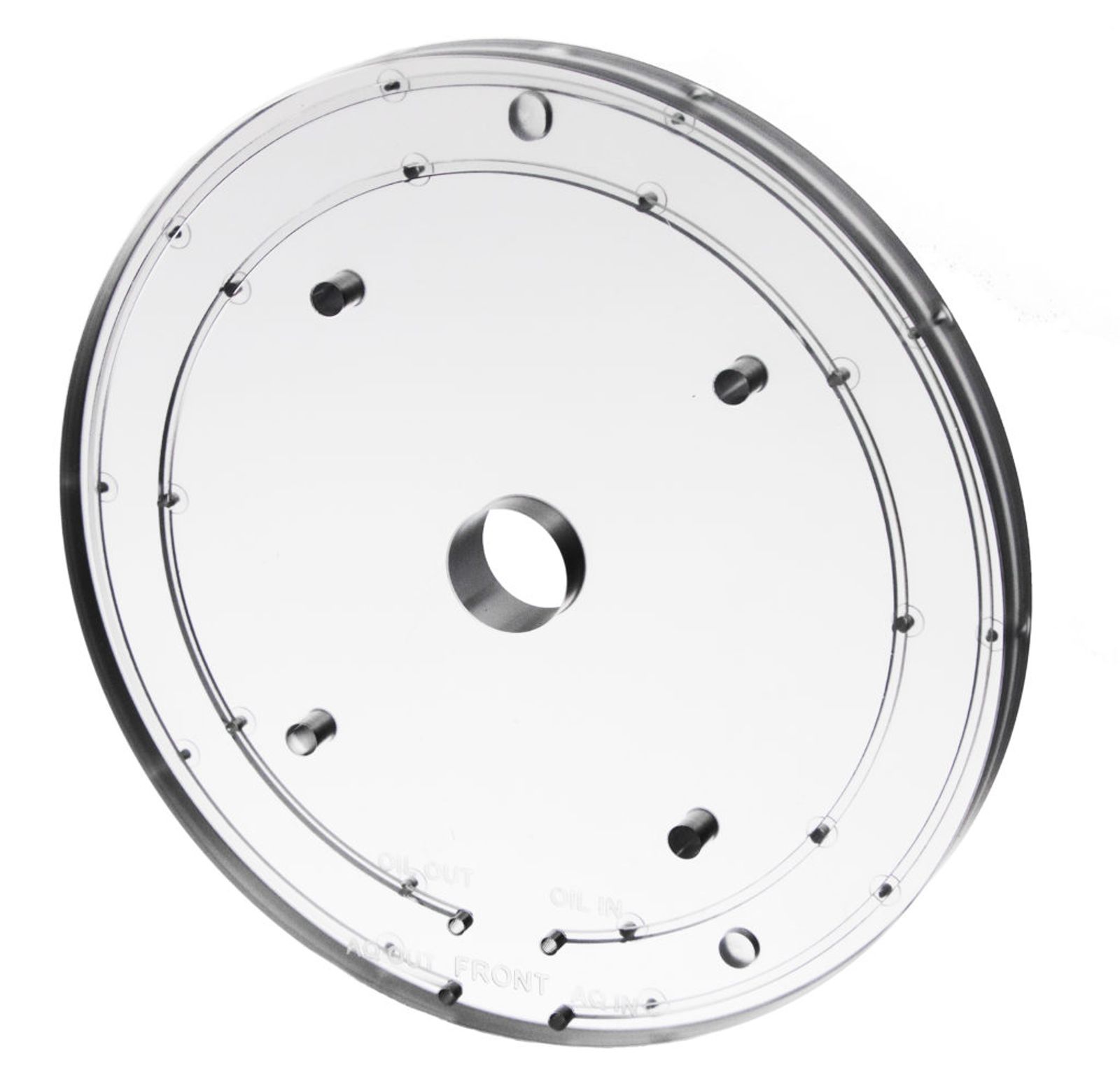
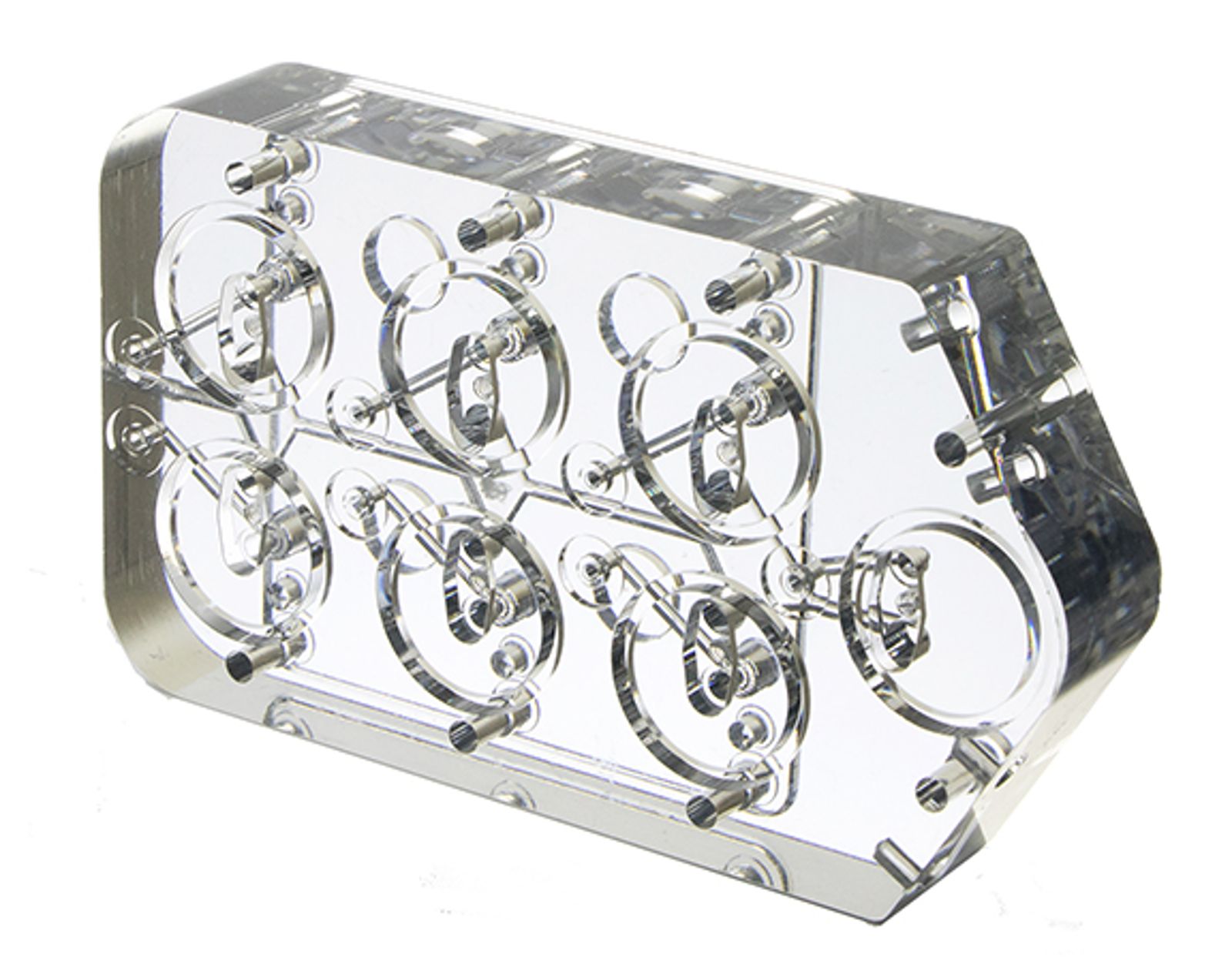
Polycarbonate has many possible configurations as a multi-layer laminated manifold with .020 or smaller channels (depending on the application). From a design standpoint, many discourage using square channels within manifolds here. Polycarbonate manifolds should have either D-shaped or full round channels for optimal flow. Channel spacing as close as 1x nearest feature size is possible. What's more, we can place flat bottom ½-28 ports or similar can on the bond line with surface finishes for valve mounting can hold as low as 20 µin.

When bonded, engineers can expect a very clear polycarbonate manifold (with a light gray or purplish tint, if using tinted stock). For frequent assembly and disassembly of pumps or valves, consider heat-staked threaded inserts over direct machined threads or helicoils. This is becuase polycarbonate is stress sensitive to long-term loading in stress risers. The pullout strength and low stress on other adjoining components make inserts a best-practice choice for polycarbonate manifold design.

Easy To Work With

This thermoplastic is easy to machine, polish, weld, and bond.

Elastic But Strong

Polycarbonate manifolds offer high modules of elasticity without compromising their strength or structure.

Electrical Capabilities

Excellent electrical properties and low moisture absorption extend its viability into electronic applications.

Diverse Use Cases

Many industries use PC regularly, including medical, diagnostics, and research.

High Impact Resistance

This plastic can take a punch and keep going. We can reinforce PC with glass for extra rigidity and strength.

High Clarity

With a slight blue or purple tint, we can polish PC to have a transparent finish.

TENSILE STRENGTH AT YIELD

8900 psi

TENSILE MODULUS

340,000 psi

FLEXURAL STRENGTH

13,500

FLEXURAL MODULUS

340,000

TENSILE STRENGTH AT YIELD

8900 psi

HEAT DEFLECTION TEMPERATURE

270°F at 264 psi

FLAMMABILITY

V0 & 94HB

BIOCOMPATIBLE

USP Class 6 available

CONTINUOUS SERVICE TEMPERATURE

Up to 250°F

CLARITY GRADE

Available in clear window grade (Grade 3)

Polycarbonate has the capacity to transmit 88% of light, making it ideal for windows and other products. Light transmittal, along with its superior impact resistance and toughness, makes polycarbonate an excellent choice for sight glasses, other optical uses, and housing parts. It is highly utilized in aircraft, fluid handling, electronic manufacturing, and the automotive industries.