.jpg?format=pjpeg&width=1600&quality=75&auto=webp)
- High impact resistance
- Excellent high temperature tolerance (continuous service temperature to 218°C (425°F)
- Good resistance to wide variety of chemicals
- Inherently transparent in amber; available in black or white
- Biocompatible & sterilizable via steam, EtO, gamma, autoclave
- USP Grade VI grades available
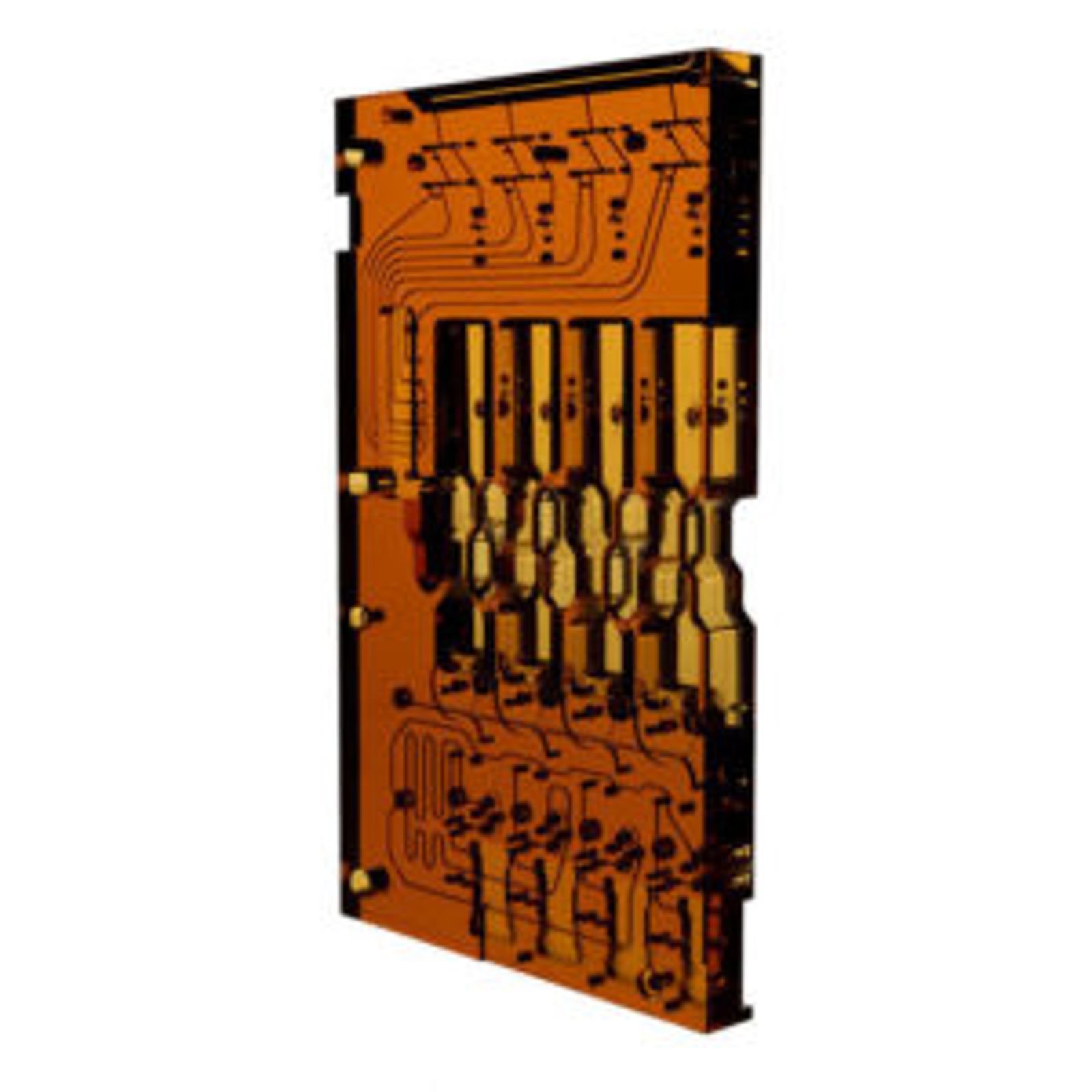
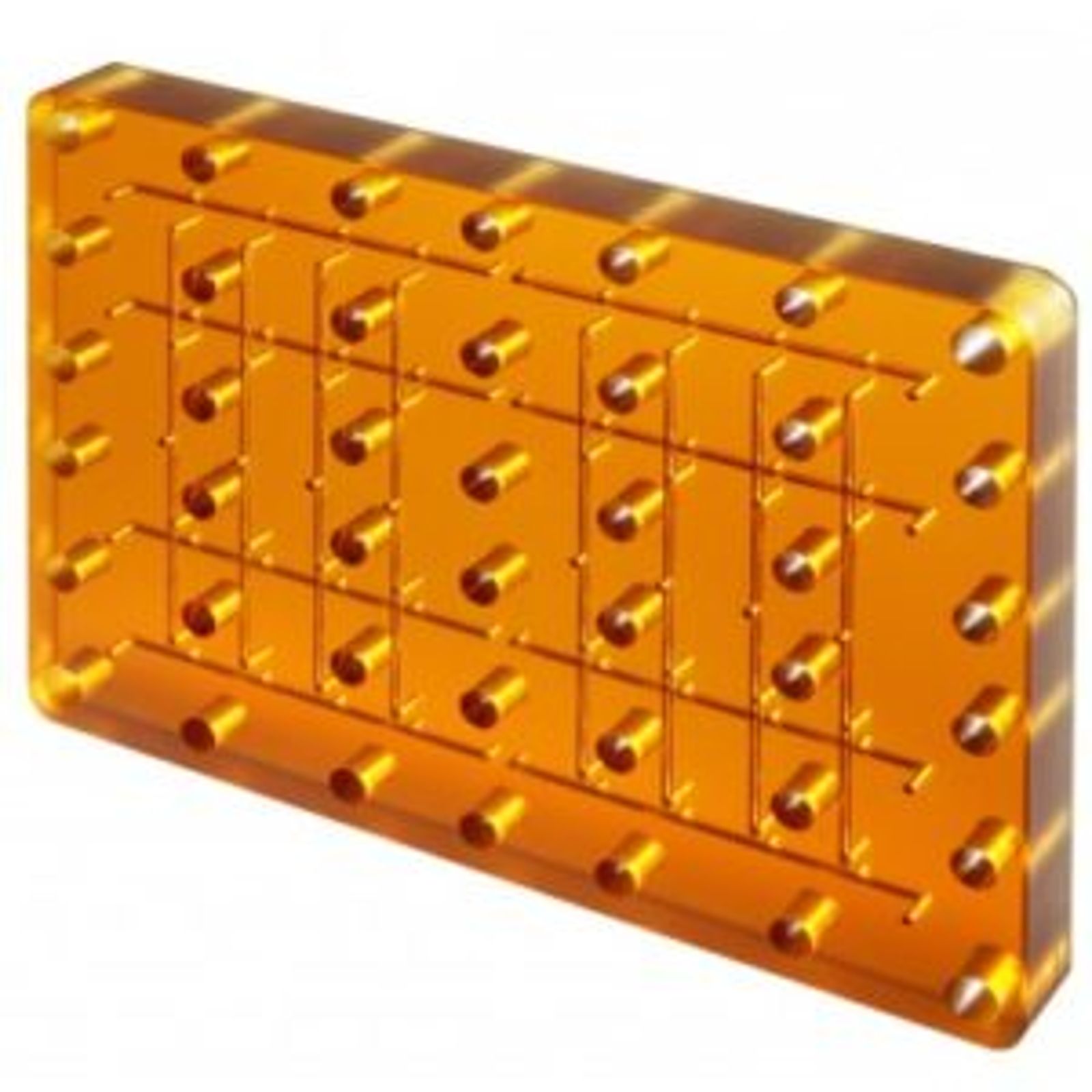
For rapid prototyping and manufacture, Radel® plastic resin is a tough, stable performer.
Radel® manifolds are frequently used in medical devices, often in surgical and medical device handle applications. Its most favorable property is long-term resistance to steam sterilization without stress cracking.
Beyond unlimited steam sterilization, other sterilization methods for Radel® components include radiation, dry heat, and cold. Radel® manifolds offer a superior combination of high-performance properties, including excellent thermal stability, outstanding toughness, and good environmental stress cracking resistance.
- Combustion resistance
- Hydrolysis resistance
- Suitable for structural applications
- Great electrical insulation
Excellent thermal stability
Good environmental stress cracking resistance
High glass transition temperature (Tg)
- Ranges between 200°-215°C (392°-419°F) High heat deflection
- Up to 204°C (~400°F)
In its natural state, polished Radel® (or polyphenylsulfone (PPSU)) is dark amber, similar to Ultem® and PES. This materials also comes in black and white as standard stock colors for Radel®. Medical devices often use these black and white colored resins.
As it responds well to vapor polishing and optical machining, the polishing process gives Radel® better impact and chemical resistance than Ultem® or polysulfone parts. However, clear Radel® components do absorb UV light and, due to this, are unsuitable for applications involving UV as they compromise the product's structure. For applications involving visible light, transmittance for a 2mm thick clear sample is 80% with 3% haze.