Machined Plastics
Plastics
Machined Plastic Parts Materials ABS Plastic for Machined Parts & Prototypes Acetal & Delrin MachiningAcrylic Plastic Materials & MachiningCOC/COP Plastic Materials & MachiningCPVC Plastic Material & MachiningCTFE/KEL-F Plastic Material & MachiningDelrin AF Plastic Material & Machining ECTFE/Halar Plastic Material & Machining Fluorosint® 500 and 207 Plastic Materials & MachiningHDPE Plastic Material & MachiningLDPE Plastic Material & MachiningNoryl® Plastic Material & MachiningNylatron GS: Self Lubricating Nylon for Precision MachiningNylon 6/6 Material & Machining PBT Plastic Material & MachiningPEEK Plastic Machining for Medical, Life Science & Aerospace OEMsPES (Radel A) Plastic Material & MachiningPlastic Machining With PETPhenolics/G10 Plastic Machining Polycarbonate Plastic & MachiningPolypropylene Plastic Material & MachiningPolysulfone Plastic Matetial & MachiningPPS Plastic Material & MachiningPVC Plastic & Machining PVDF Plastic Material & MachiningRadel® Plastic Material & MachiningRexolite® Plastic Material & Machining Tecadur Plastic Material & MachiningTeflon® Plastic Machining (PTFE) | Controlled FluidicsTorlon PlasticMaterial & MachiningUHMW Plastic Materials & MachiningUltem® (PEI) Plastic Material & MachiningVespel® Plastic MachiningPOLYMER OPTIONS
cf-logo.png

COMPREHENSIVE CHEMICAL RESISTANCE CHART FOR PLASTIC MATERIALS

Precision‑machined parts often run in aggressive environments, from strong disinfectants to concentrated buffers. This chart helps engineers and scientists filter options before requesting a design review or quote.

How To Read This Chemical Resistance Chart 

  • A = Excellent resistance (negligible effect, suitable for continuous exposure).
  • B = Good resistance (minor effect; generally acceptable for most applications).
  • C = Fair resistance (noticeable swelling, softening, or loss of strength; limit to intermittent use).
  • D–F = Poor to severe effect (not recommended for contact or continuous exposure).

Ratings assume room temperature and typical concentrations unless otherwise specified, and that application testing is still required.

Need to see something focused more on those chemicals typically found in the Life Sciences? Check out this chart.

See something incorrect or should be added? Let us know! 
PLASTICS INCLUDED IN THIS CHART

  • Acrylic (PMMA): Used for clear manifolds and optical windows; good clarity but only moderate chemical resistance to some solvents.
  • Polycarbonate (PC): High impact strength, but limited resistance to many solvents and some cleaners.
  • COC/COP: Excellent optical clarity and low extractables; good resistance to many aqueous solutions used in diagnostics.
  • PTFE (Teflon): Extremely high chemical resistance and wide temperature range; common in aggressive life‑science and industrial chemistries.
  • PEEK: High‑performance thermoplastic with excellent resistance to many acids, bases, and organics at elevated temperatures.
  • PPS: Excellent chemical resistance plus high mechanical strength up to about 425 °F.
  • UHMW‑PE: Tough, low‑friction, and highly resistant to many chemicals, often used in wear parts and fluid handling.
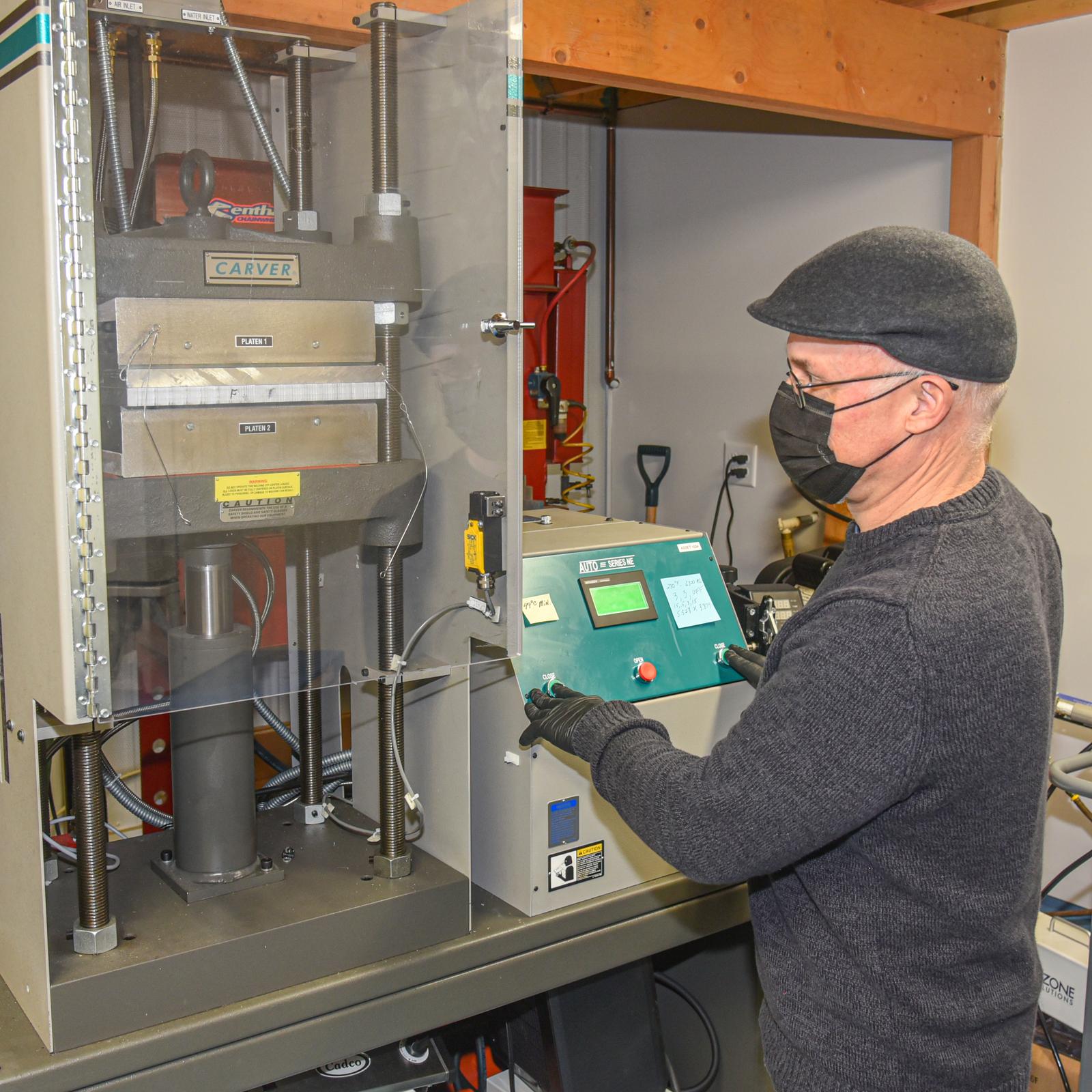
Man working CNC machine

EXAMPLE CHEMICAL RESISTANCE CONSIDERATIONS

What are some common life-science buffers and salts commonly used?

Sodium chloride, phosphate buffers, and similar aqueous solutions are generally compatible with most high‑performance fluoropolymers and many engineering plastics, but some amorphous materials can stress‑crack at high temperature or concentration. See all of them on our life-science specific chemical chart.


What acids, bases, and oxidizers narrow down my material choices most? 

Strong acids (e.g. hydrochloric, sulfuric) and strong bases (e.g. caustic soda) quickly narrow the usable material set to PTFE, PEEK, and a few specialty plastics. Oxidizing agents, such as hydrogen peroxide and sodium hypochlorite, can stress some plastics that otherwise resist neutral aqueous solutions, so users should verify exposure conditions and consult both charts.

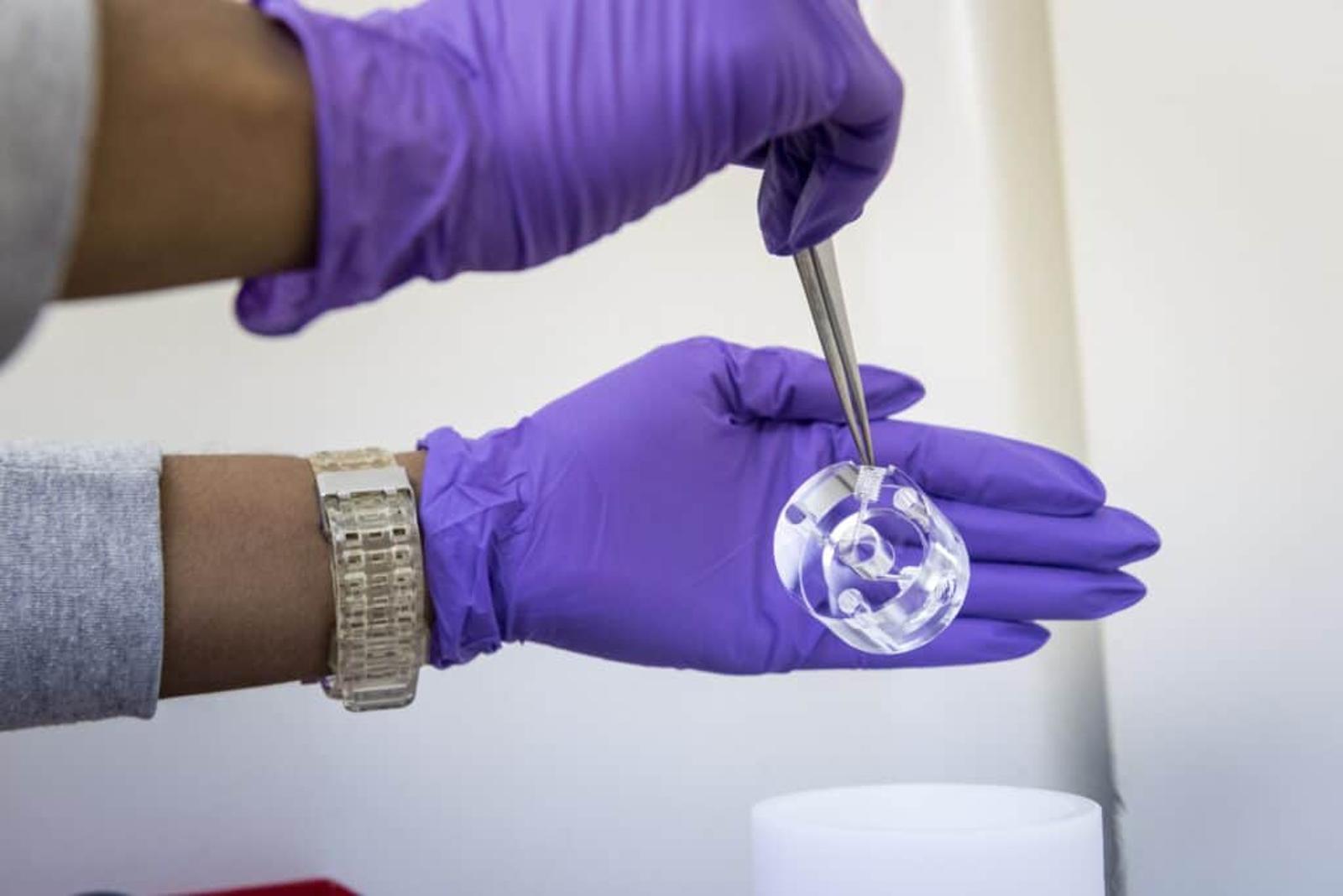
A person wearing a watch and purple gloves holds a small clear polished plastic component with tweezers in one hand and supports it with their other hand.

WHEN TO CHOOSE A DIFFERENT MATERIAL OR SEEK ASSISTANCE

Contact our expert engineers if you have any of the following:

  1. Your expected media is a proprietary formulation, blend, or contains solvents not listed on either chart.
  2. Operating conditions involve high temperature, pressure, or long‑term static stress, where creep and stress‑cracking become critical.
Share your chemical list and operating conditions, and our team can recommend suitable materials or manifolds for your application.
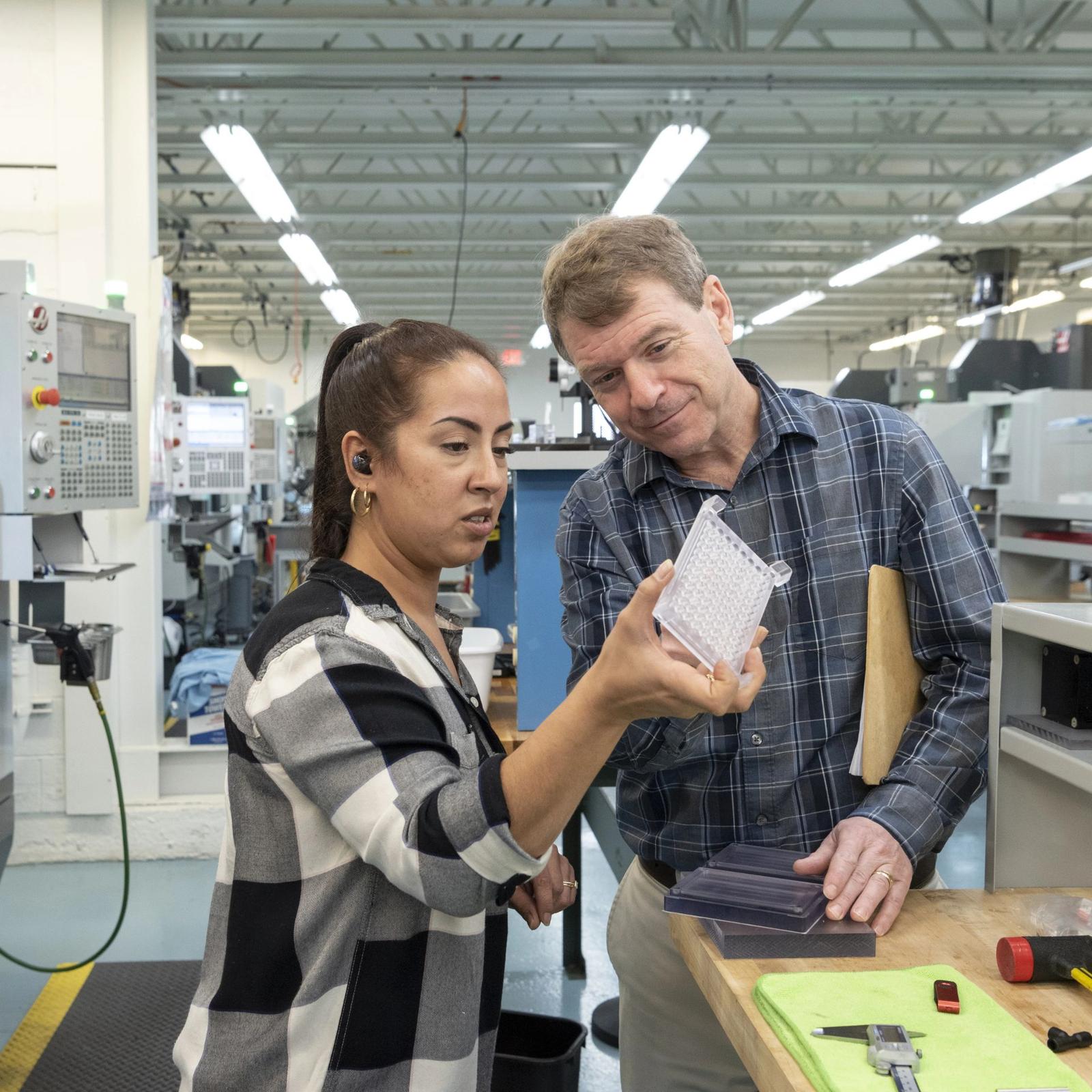
people-looking-at-plastic-manifold2.webp